root@exposed:~#

root@exposed / sudo

The paywall, Unix-flavored

sudo: a subscription that pretends to be a permission.

On a real machine, sudo is how you borrow root for one command. On Root, Sudo is how you pay for HD streaming, wear a badge, and later buy Cores so a community can install the apps the seed round was about. The superuser stays at the company.

18 June 2026, Jesse Dietrichson: Sudo is “more than a subscription.” It is “a substantial stepping stone toward our bigger mission of creating the first community sandbox platform.” Launch day contents: high-framerate HD streaming, “the feature you’ve asked for most,” and a Sudo badge for early supporters.

Same post, the promise: emojis, animated avatars, animated banners stay free. “We’re never putting self-expression behind a paywall.” Two paragraphs later, the badge. Discord Nitro opened with a tag and a stream quality bump too.

Cores arrive “in the near future.” Each month, one Core, spent on a community, “powering it up with new capabilities, like the ability to add apps.” The RPG Pub, 17 March 2026, already had the user-facing version: if your community wants an app or bot, you pay. First-party apps stayed free. Third-party is the meter.
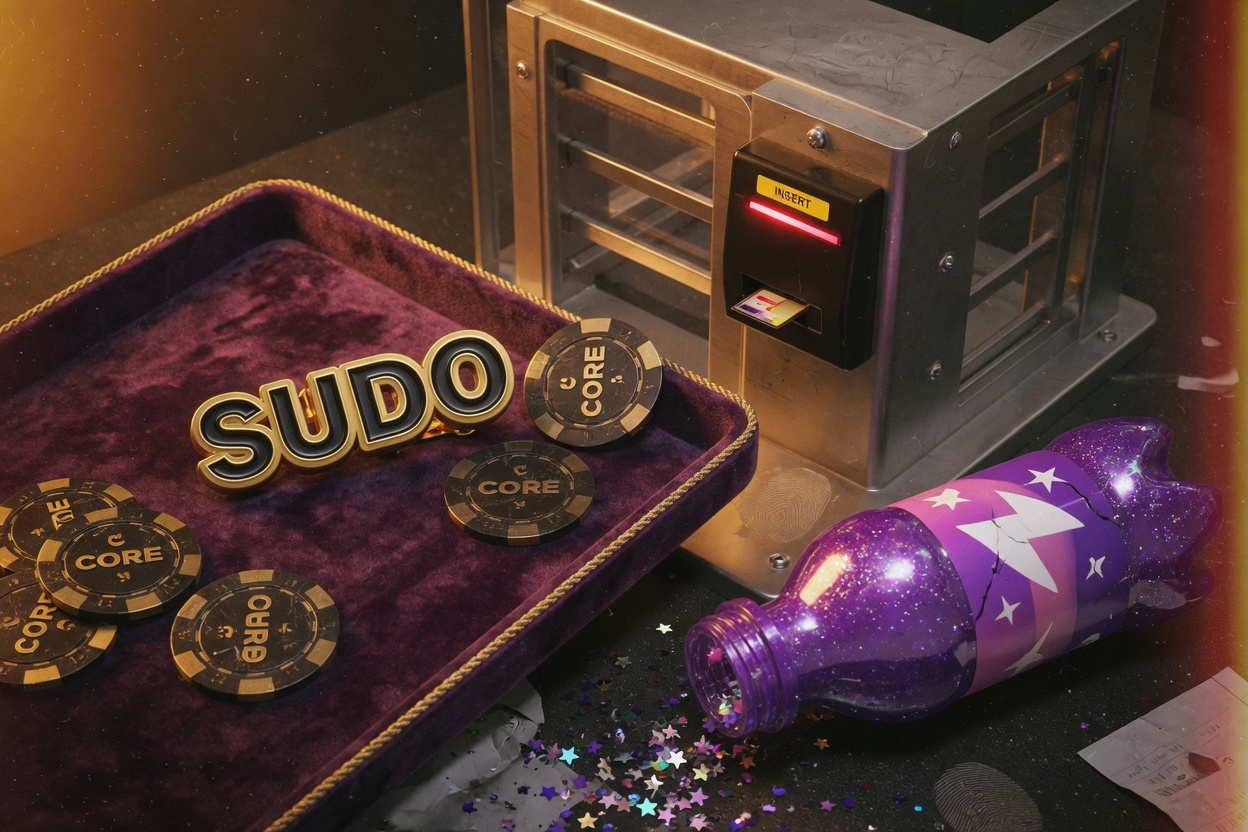
A gold SUDO pin on a velvet tray next to CORE poker chips, a card-reader gate, and a spilled sparkle bottle.
Nitro, Boosts, and a badge. The names changed. The ladder did not.

Rosetta stone

Discord already shipped this menu.

DiscordRootWhat it does
Nitro Sudo Personal subscription. Stream quality, a mark on your name.
Server Boosts Cores Monthly tokens you drop on a community. Root’s version unlocks apps.
Nitro badge Sudo badge Cosmetic. Root promised cosmetics would stay free.
App Directory / Activities Root App Store Mini-apps inside the chat. Root hosts yours. Monetization: Reserved.
Auto-renew, store cut Stripe, auto-renew, no refunds Terms §5: payments final, retry failed charges, cancel at period end.

Terms §5.5-5.6

All payments are final.

Subscribe and you authorize recurring charges until you cancel. Price changes apply at the next renewal. Cancel, and you keep Sudo until the period ends. You do not get a refund for time you already paid. Root may retry failed payments and charge a backup card. Chargebacks can suspend the account.

Developer Terms §11

Monetization (Reserved).

22 July 2026: “The Developer Platform does not currently include developer-facing monetization features.” You will not sell the App or charge Root users except through features Root has not made available. Ask Root, 5 June: “our job is to make sure that when a developer builds something great, they can make money from it.” The job is still a heading.

The raise

$9 million, then a paywall for the pitch.

Konvoy’s investment note, June 2025: they backed Root because of the built-in app store. Sudo’s own blog: Cores exist so developers can release apps in that store. The thing the VCs bought is the thing communities now rent by the month.

Liability

Cap: $100, or 30 days of spend.

Terms §12: no consequential damages, even for lost data or a security breach. Remaining liability is the greater of what you paid in the preceding 30 days, or one hundred dollars. Bring the claim within a year. Bring it alone. JAMS, not a jury.

The joke in the name

They taught the community that root means control, then sold sudo.

Jesse: people think the name is a tree. It is the superuser. “They can customize anything and change anything they want.” On Linux, that person owns the box. On Root, the closest command you can buy is a stream-quality bump and a token that asks the landlord to turn an app on.

If you wanted the Unix version, you wanted self-host, an export, and a license. Those are still “down the road,” “thinking deeply,” “fully intend.” The subscription shipped on a dated blog post. That is the priority stack.